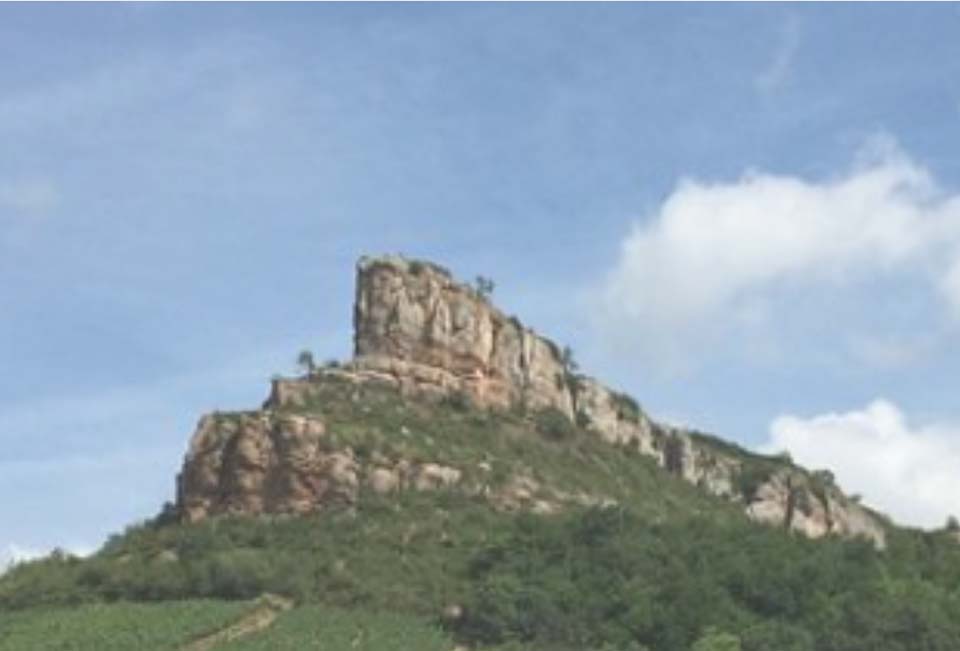

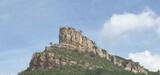
The Mâconnais is the soul of southern Burgundy, a rural agrarian Eden occupying a great swath of vineyards and farmlands south of the renowned central area of Burgundy, the Côte d’Or. The region continues south to the stunning Rock of Solutré near the twin wine towns of Pouilly and Fuissé, where the Mâconnais ends and Beaujolais begins. Vines have been grown here since Roman times, providing wine through the centuries to the powerful Catholic abbeys of Cluny and Tournus, whose astonishing ruins captivate tourists to this day. The historic pre-Roman town of Mâcon lies at the heart of the local wine industry, giving its name to the region and its people.
For decades, even centuries, the Mâconnais has been a bottomless well of inexpensive, ordinary white wine. In any Paris sidewalk bistro, “un ver de blanc, s’il vous plait” would get you a glass of Mâcon. Wine was plentiful and cheap, life was lazy and good. But the emergence of dynamic affordable quality wines from burgeoning new world wine regions undid that long tradition: old-fashioned Mâcon wine fell out of favour, prices collapsed and markets dried up.
In the face of this despair, the Mâconnais doubled-down on doing what they do best: make white wine. They re-organized their industry, invested in exemplary vineyard management, built new state-of-the-art wineries, and implemented rigorous standards and quality controls. They identified the best vine-growing locations across their large area, and developed a classification system to guide you through their new products. The result is nothing less than the best value in white wine in the world today.
All the best wines are made from pure Chardonnay grapes, and somehow, they manage to combine excellent richness of flavour with a lively expressive lightness that makes them perfect accompaniments to all sorts of summer fare: salads, fish and seafood, charcuterie plates – these wines are versatile and delicious in so many settings. And their prices have remained remarkably stable and affordable as their reputation soars – this is what makes them today’s best value in quality white wine.
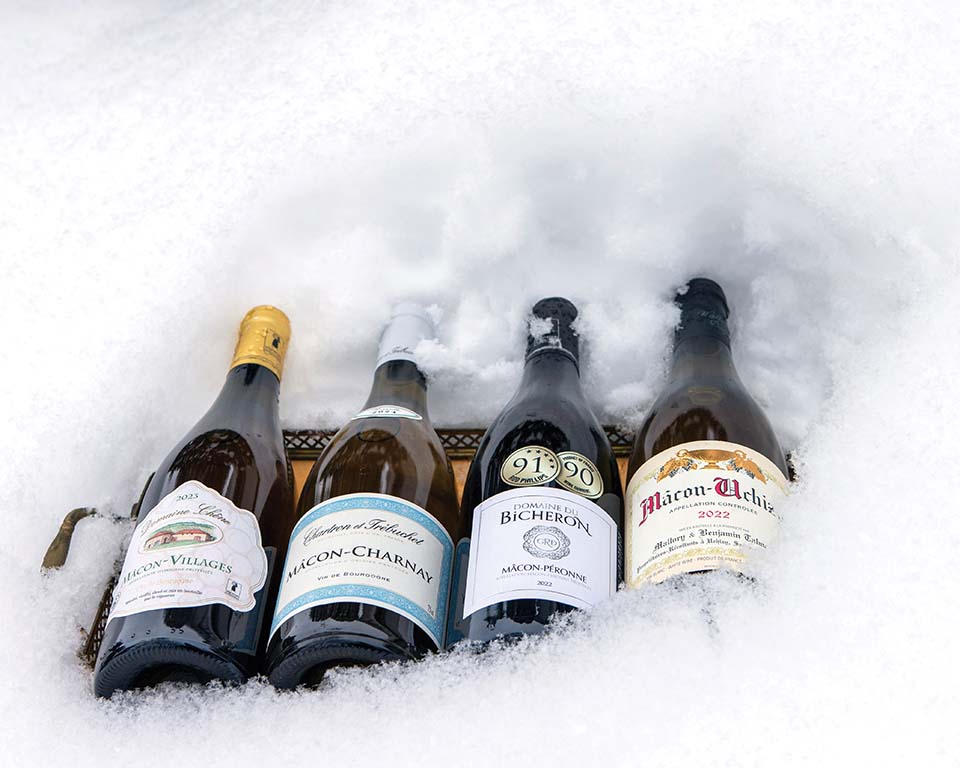
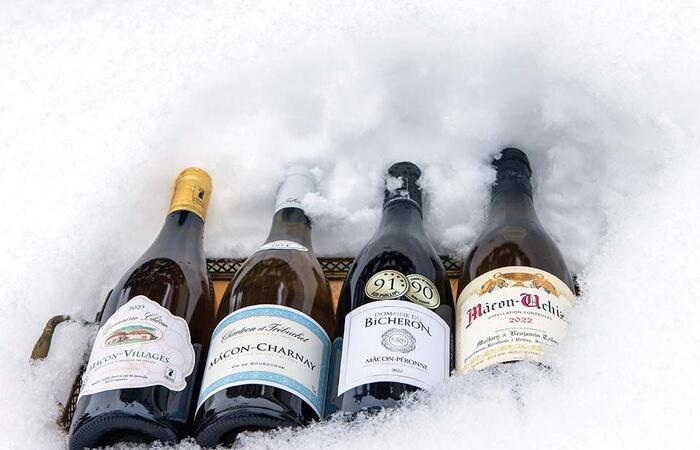
The Mâconnais re-vamped their naming system by adding to the label the name of the village at the centre of the finest vineyards, thus Mâcon-Village was born. There are some 27 named villages – every now and then they add a new one, and you don’t have to memorize them all, just learn to watch for the hyphenated names: Mâcon- followed by the name of one of their exemplary wine towns: Mâcon-Azé, Mâcon-Chaintré, Mâcon-Lugny, Mâcon-Pérrone, Mâcon-Uchizy, Mâcon-Verzé, Mâcon-Viré are some that fairly regularly appear in our marketplace. There is one somewhat ambiguously named Mâcon-Chardonnay – that is the name of the village, as well as the grape from which these wines are vinified. As ever, watch for the terms Mise du Domaine and Proprietaire-Récoltant on the label as your assurance of provenance.
These seasonal beauties tend to arrive suddenly and sell out quickly, so keep a close eye on your local LCBO. Subscribe to the LCBO e-distribution list for their bi-weekly release catalogue to receive advance notice of their imminent arrival. Some red wine is made in the Mâconnais, but it is generally of mediocre quality and not particularly recommended; you would do better with a Beaujolais.
At the very south of this prolific region is a group of tiny villages whose wines go to market under their own village names alone – Pouilly-Fuissé, Pouilly-Loché, Pouilly-Vinzelles, St. Véran – with no mention of the region. These stand alone at the pinnacle of Mâconnais wines in both quality and (unfortunately) price, meriting an article of their own.
© Paul Inksetter 2026