

I’ve always enjoyed those competition shows on TV. You know, American Idol, RuPaul’s Drag Race, The Voice. I watched as folks put their talents on display and then had to endure feedback from the judging panel. I go back to the days of Simon Cowell, Randy Jackson and Paula Abdul when American Idol was must-watch TV. Randy and Paula were always so kind and provided a creative, constructive critique to contestants but Simon was brutally honest. Watching TV judges weigh whether Kelly Clarkson or Justin Guarini should win made me realize how challenging the role of a judge can be. (In case you don’t remember, Kelly won Season One.)
Long before TV judges appeared on our screens, agricultural fairs offered farmers and rural folks an opportunity to show their wares, win some prizes and take away a ribbon for their efforts. There are more than 200 annual fairs in Ontario alone! In the Township of Gillies, just south of Thunder Bay, the Hymers Fall Fair has been a must-see, Labour Day weekend event since 1912. Many of the categories, including Livestock, Small Animals, Horticultural, Arts & Crafts, Canned Goods, and Baking, are still judged today.
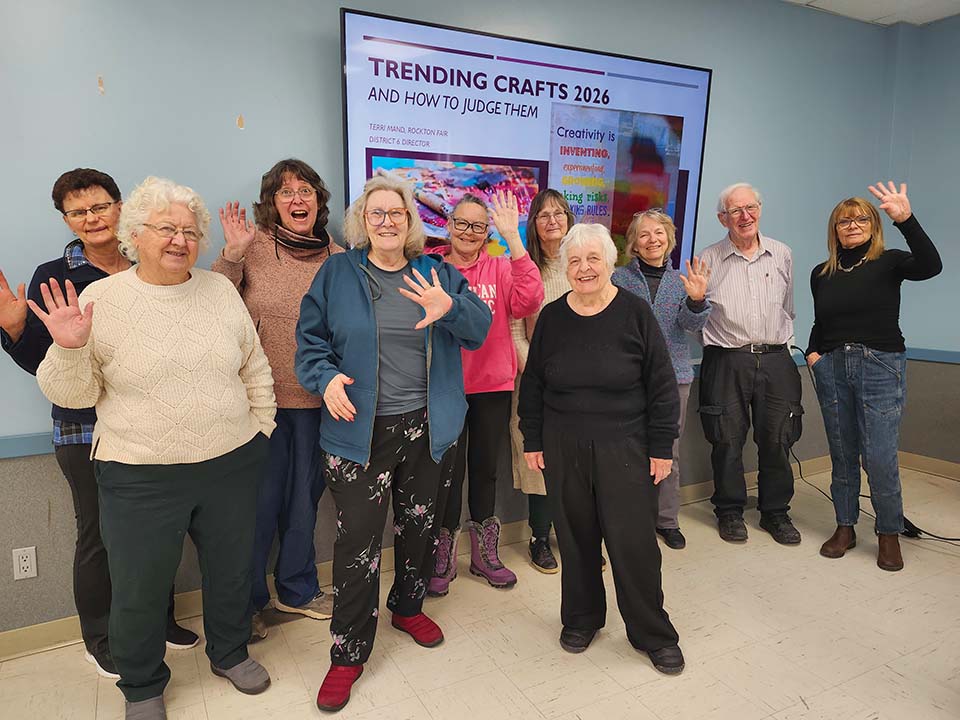
I wanted to know how judges were able to evaluate and rank such a wide variety of items. So, at the invitation of Randy Creighton, an OAAS Certified Judge, I dropped into a local Judging School event which covered a variety of topics and was sponsored by the Ontario Association of Agricultural Societies (OAAS). I wanted to meet some of the people who volunteered to take on these important roles. Thunder Bay is part of District 15 and includes the Canadian Lakehead Exhibition, Murillo Fair, Hymers Fair, Emo Fair, Dryden Fair and Kenora Fair. Those who were taking this training session can judge at these fairs throughout the district. Judges start off as apprentices and after a few fairs under their belts, they become certified by OAAS.
When I arrived at the school, participants were getting a refresher on judging honey. How difficult could it be to judge honey, I wondered. I figured the judging was just based on how sweet the honey was, but there was so much more.
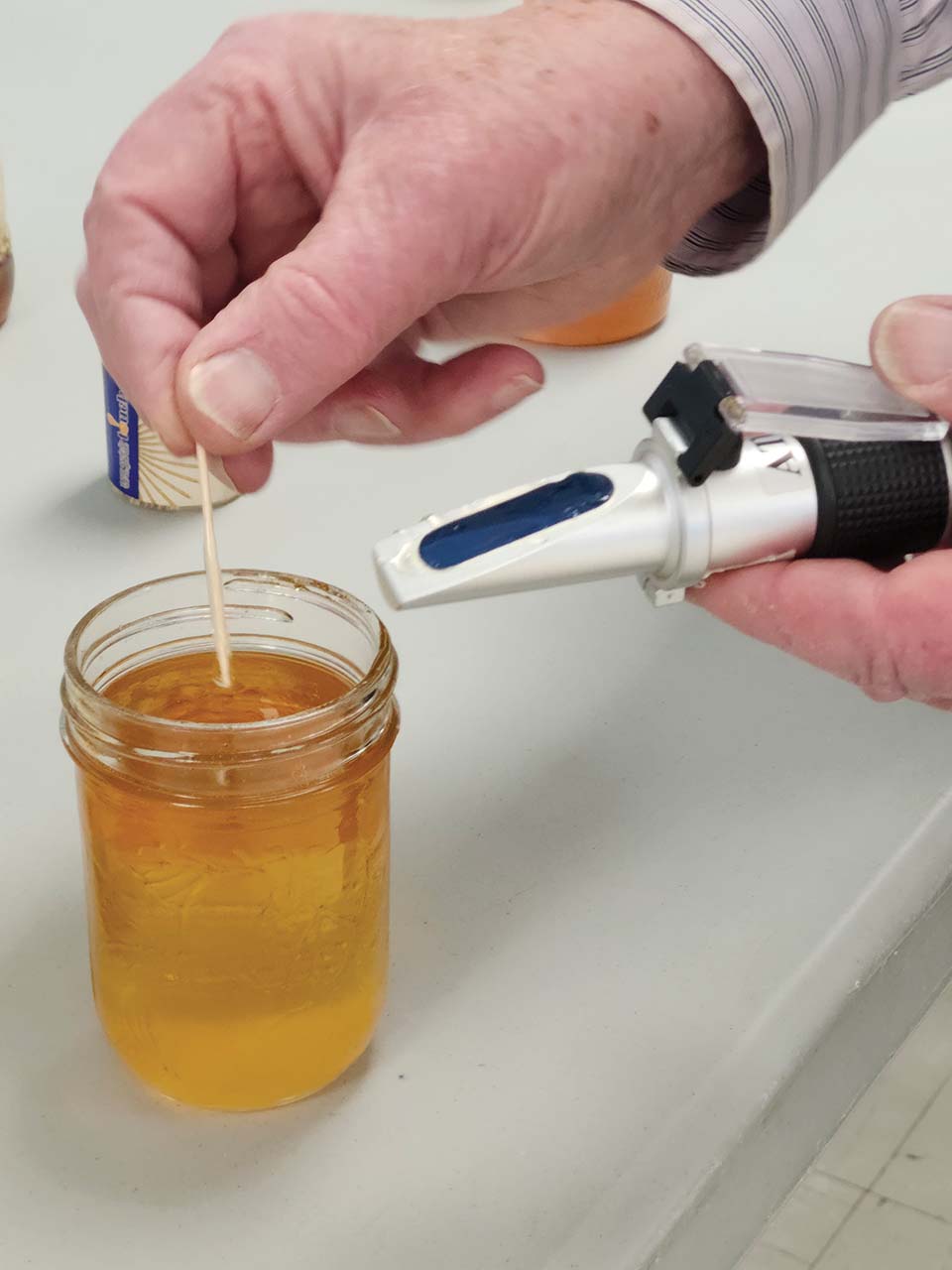
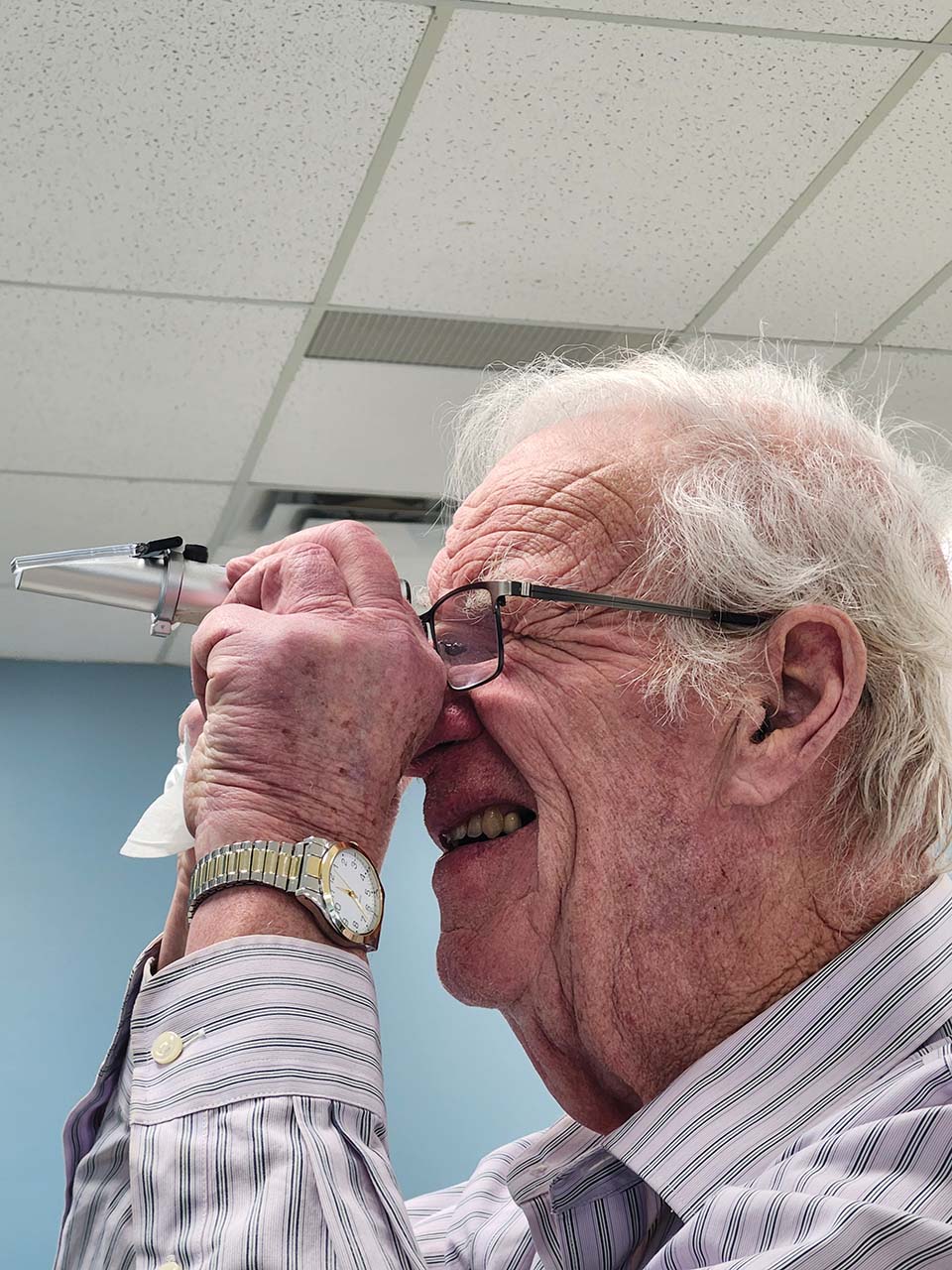
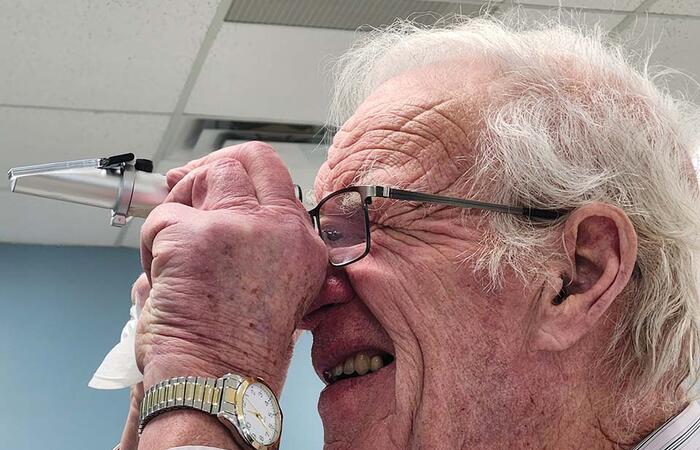
For example, the density, or measured moisture content, should be less than 16.5% to score the most points from the judges. The moisture content of honey is measured with a device called a reflectometer. If the moisture content of honey is more than 18.6% it will start to ferment. In the photo, Randy is holding up the honey sample to the light so the reflectometer will give him the moisture content.
I also learned that there are fourteen different colours of honey, but only one, White liquid honey, is judged at the District 15 fairs. Exhibitors have to enter two jars with a capacity of 375 ml. Honey is judged on appearance (including moisture content, brightness, flavour and aroma, uniformity and colour), clarity (free of crystals, pollen, wax and bubbles) and containers (appearance and uniformity of fill). Whew – and that’s just honey! There are hundreds of other categories that judges need to be aware of as well.
Sylvia Goodheart has been involved with the agricultural fairs for 54 years.
She enjoys the camaraderie and the opportunity to meet new people.
She’s also a judging instructor who helps to educate judges in the region. An avid and adventurous crafter, she continues to enter her crafts in the fairs, but never judges her own entries!
For anyone interested in becoming a judge, Sue-Ellen Blekkenhorst, another long-time District 15 judge and judging instructor, recommends entering the fair as an exhibitor. “As an exhibitor, you get feedback about what you’ve entered and learn to understand what the judges are looking for.” Sue-Ellen says that many exhibitors are drawn to the fair because they learn about it through their children, either at school or through the 4H Club or the Boys and Girls Club.
Peggy Blekkenhorst has been entering her photography and sewing in the Fairs since she was 19. “I grew up in Gillies Township and made my own clothes, so I started entering them,” she says.
“I got more involved with the Hymers Fair because I worked in the Exhibit Hall, assisting the judges. I was a runner and brought them the entries to judge. After a few years I graduated to being a recorder, where I’d get to put the ribbons on the prize winners and arrange the winning entries for the fair.”
Bonnie McNulty and Sheelagh Hendrick are fairly new to the judging team. Bonnie grew up as a farm girl in Wallacetown, Ontario and her family entered many of their baked goods, flowers, maple syrup and other items in the local fair. Fair time was a big deal for her growing up. Being part of the judging, Bonnie says, has brought her back to those days of youth. Being a judge has been a great experience. “All the other judges help you,” says Bonnie. “There’s so much expertise in the group that all you have to do is say you need another opinion and folks are there to help you.”
Sheelagh joined the team at the encouragement of Randy Creighton. “Randy always said I’d make a good judge,” laughs Sheelagh. “We’ve known each other for over 40 years.” Sheelagh and Randy met when Sheelagh supervised community centres for the City of Thunder Bay and Randy was, and still is, involved with Vickers Heights Community Centre. The incredible legacy of stories is what makes Sheelagh so proud to be involved. “I travelled with three other judges to Emo in a van to judge the fair and the experience of travelling together and judging together was so much fun.” Sheelagh looks to the seasoned members of the judging team, like Randy Creighton, as mentors.
As with most things, the judging categories are changing with the times. While baking, eggs, fruit, vegetables, wine, beer, liqueurs, vinegars, jellies, photography, and junior baking are still there, they have been joined by newer categories, like 3D printing, upcycling, pebble art, and live-edge woodworking.
I’ve decided to enter a Hymers Fall Fair contest this year. Stay posted to hear what I decide to enter. It’s a toss-up between a rag rug or a bouquet of snapdragons. I’m also leaning towards entering my creation in the Class KS “Charity Begins at Home.”
All the entries in this category are donated to various charities. I think I’ll make something, like a walker tote, for someone with special needs.
Community is made richer through the efforts of those who display, organize and judge at these events. They continue to bring people together to grow, share, and learn.
The Hymers Fall Fair takes place on September 6th and 7th this year. If you want to enter one or more of the many contests, you’ll need to have your items at the fairgrounds a few days before the fair begins. For more on the judging categories, entries and prizes, go to hymersfair.ca or follow the Fair on social media.
For those interested in becoming a judge, contact Randy Creighton at rcreighton@tbaytel.net.
See you at the Fair!