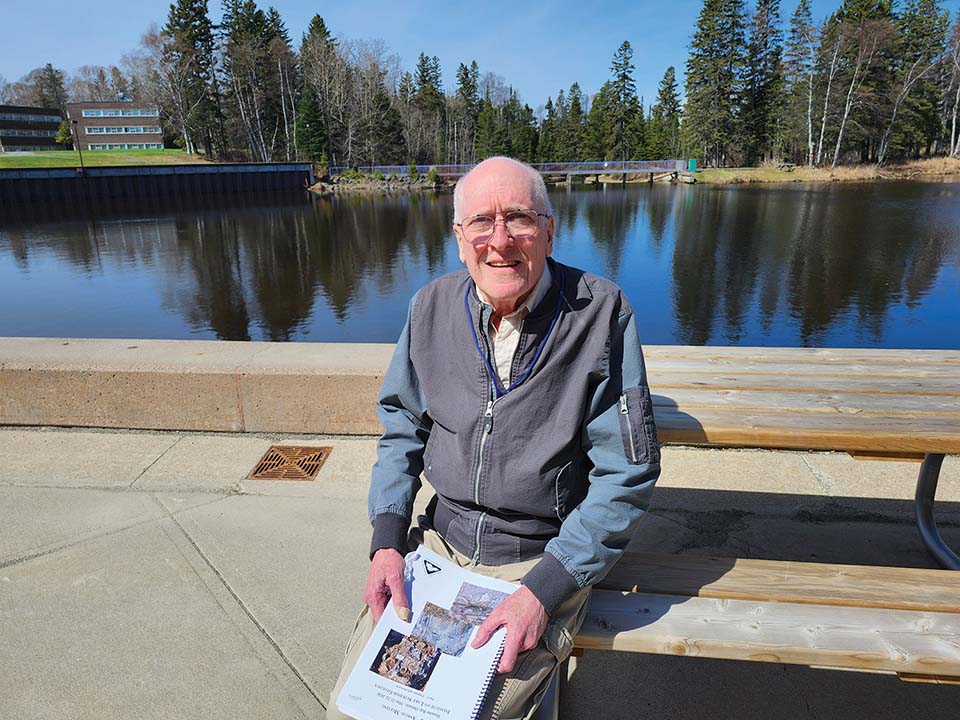

Recently, my husband and I were chatting to a neighbour outside our home. Out of the corner of my eye I noticed a man, with a flyer in his hand, looking intently at a house across the street. My husband said, “I bet he’s got the historical walking tour of Thunder Bay that lists many of the older homes in the city.” My tourism advisor instincts kicked in – for a few summers I had been a travel counsellor at the Pigeon River border Tourist Centre. I loved that job because I enjoyed talking to people. I approached the man and asked if he, indeed, was doing the self-guided walking tour. He said yes. I then asked if he was from out of town. It turned out that he was from Fargo, North Dakota. My husband noticed us chatting, so he walked over. But as he got closer, he recognized the visitor. “Hugh?” he asked. The visitor responded affirmatively. It turns out that my husband, Mark Smyk, and Hugh knew each other because of their shared interest in geology. Both were regulars at the annual meeting of the Institute on Lake Superior Geology (ILSG). The traveler, Hugh Cowan, was in town for the 72nd ILSG, which my husband, along with many of his colleagues in Thunder Bay, helped to organize at Lakehead University. The gathering, hosted by volunteers in communities in Ontario, Minnesota, Wisconsin and Michigan, brings academics, industry representatives, government workers, students and those interested in geology together every year for a few days of camaraderie, education and field experiences.
“Geologists and non-geologists alike love coming to ILSG because they all feel welcome and are encouraged to learn more about the geology of the Lake Superior region,” says Mark.
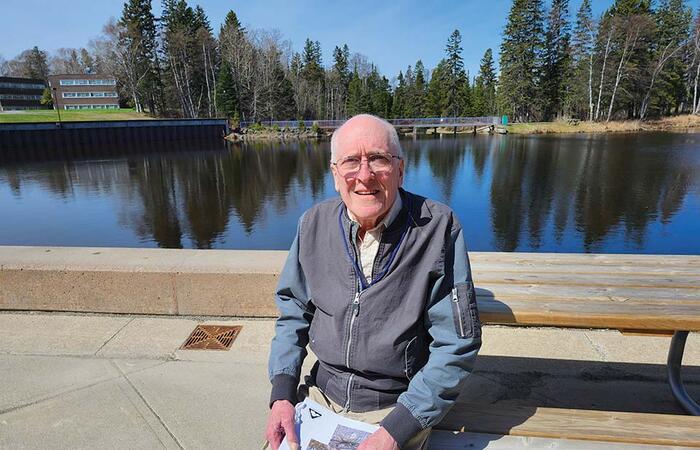
Our visitor, Hugh Cowan, is what you might call an avocational geologist who just enjoys learning about rocks. As a retired physician, Hugh got interested in geology from visiting parks over the years. But Hugh’s interest was probably launched as a child. You see, Hugh grew up on Rupert Street in Port Arthur. “Growing up, we’d look at Mount McKay and scratch our heads. We wondered, “How the heck did that get there?!”
Hugh believes that it’s important to keep learning. “I enjoy attending ILSG to learn, even if some of the talks are over my head,” he laughs. He wants people to find something that interests them in retirement and for Hugh, that is rocks!
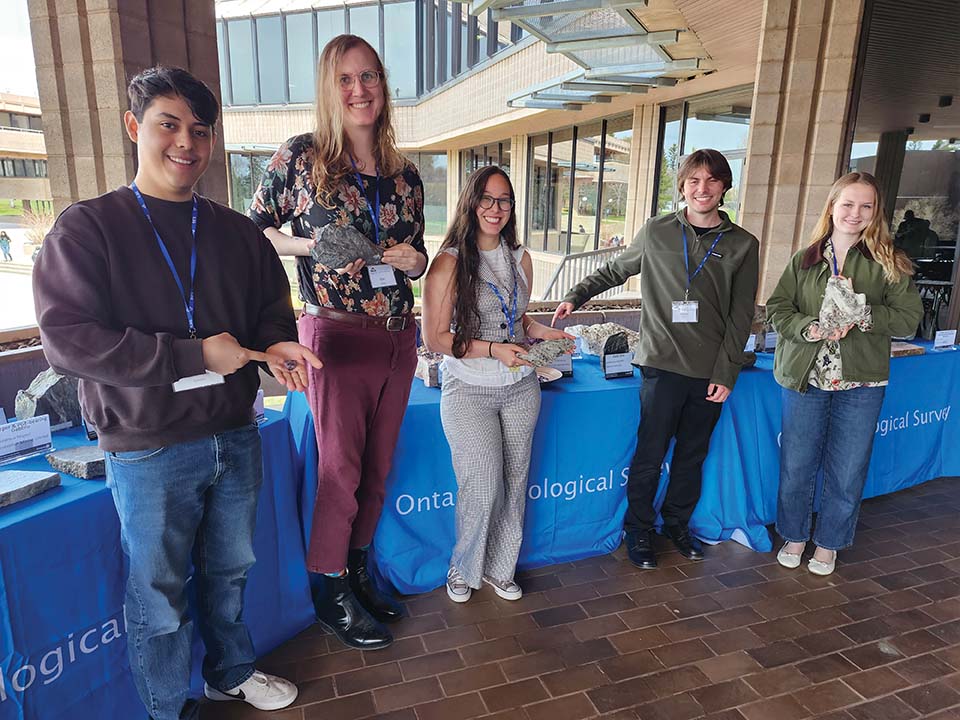
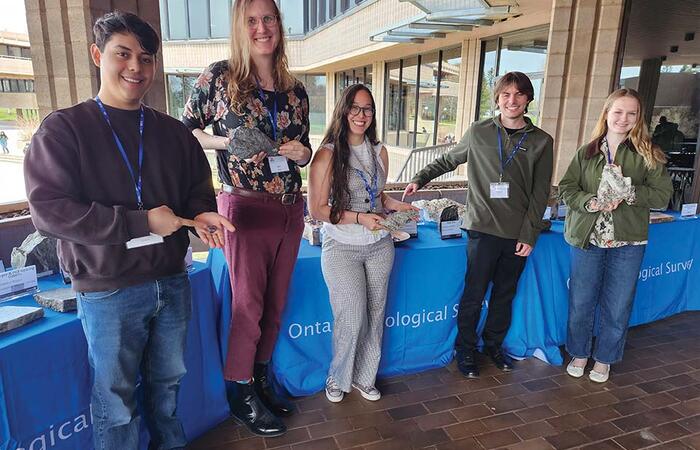
A group of students from University of Minnesota Duluth (UMD) had also traveled to Thunder Bay for the conference. I chatted with Kimberly, John Alex and Valentina. Kimberly told me that they had found geology as a career option when participating in Minnesota’s Master Naturalist volunteer program. “The program introduced me to geology as a volunteer and I liked the field so much that I enrolled as a student at UMD after that.”
Jormer Primeau had worked in parks in the Keweenaw Peninsula of Upper Michigan and loved telling the stories of rocks and Lake Superior to tourists. These “geo-stories” are rooted in where we live around Lake Superior, home to some of the oldest and most interesting rocks in the world.
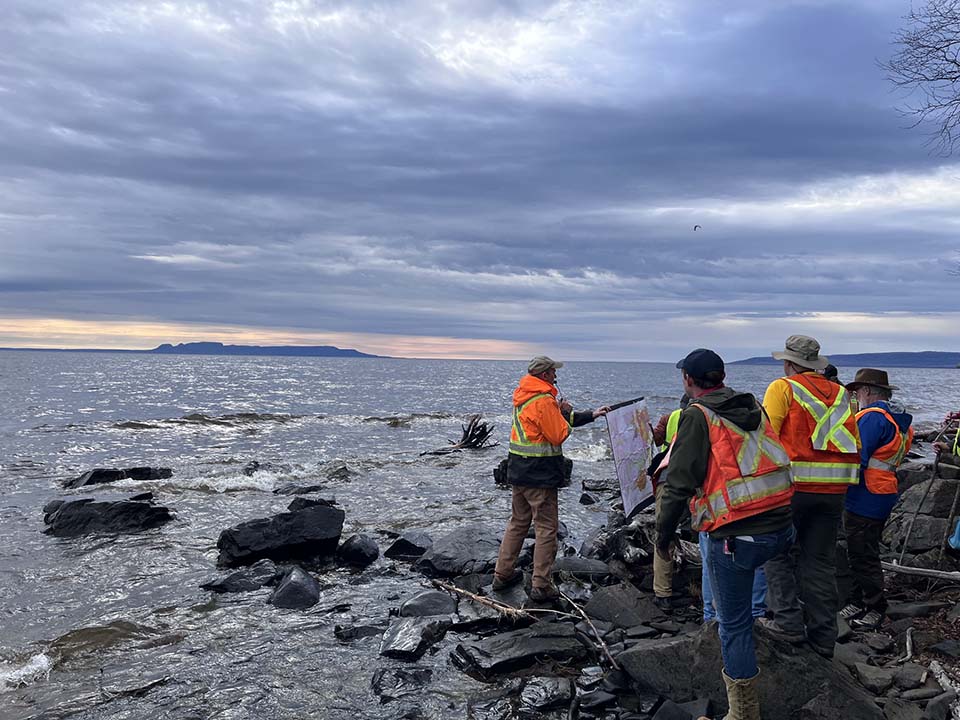
The ILSG meeting includes presentations, but the buzz is usually about the field trips where geoscientists learn from local experts about the area’s geological features. In Thunder Bay, field trips were conducted to the amethyst mines, gold exploration properties near Shebandowan, the Mine Centre area and, of course, around Thunder Bay. Always crowd-pleasers, some past trips have been conducted with canoes, boats and even golf carts, but the vast majority highlight features that are accessible on foot.
Every year, the gathering recognizes one of its own. This year, the late Bill Rose was recognized as the recipient of the 2026 ILSG Goldich Medal for his contributions to the study and promotion of the geology of the region. He was a Professor of geology and volcanology at Michigan Technological University for over 41 years, but in his retirement he embraced the field of geoheritage to increase public understanding of the importance and global significance of Lake Superior geology. Erika Vye, of the Great Lakes Research Center at MTU, said in Bill’s citation that, “This highly significant phase of his career, despite being retired for most of it, came from a genuine desire to encourage people to “get outside and love it”, to increase their Earth science literacy, and to deepen their love of Lake Superior.”
Being on the shores of this great lake is something we might take for granted, but the geo-stories it produces will be revealed and told for years to come.
So, this year, do what the late Bill Rose suggested and “Get outside and love it!”
For more information go to: www.lakesuperiorgeology.org