


Author’s note: Recently, I had a not-so-pleasant encounter with a dog. I was getting into my car when he rushed at me, teeth bared, barking and growling. I dove into my car and slammed the door, feeling a little unsettled. The owner of the dog didn’t seem concerned which made me stop and think: do we as dog owners simply accept our dog’s negative behaviour because we don’t care or we just don’t know how to correct it?
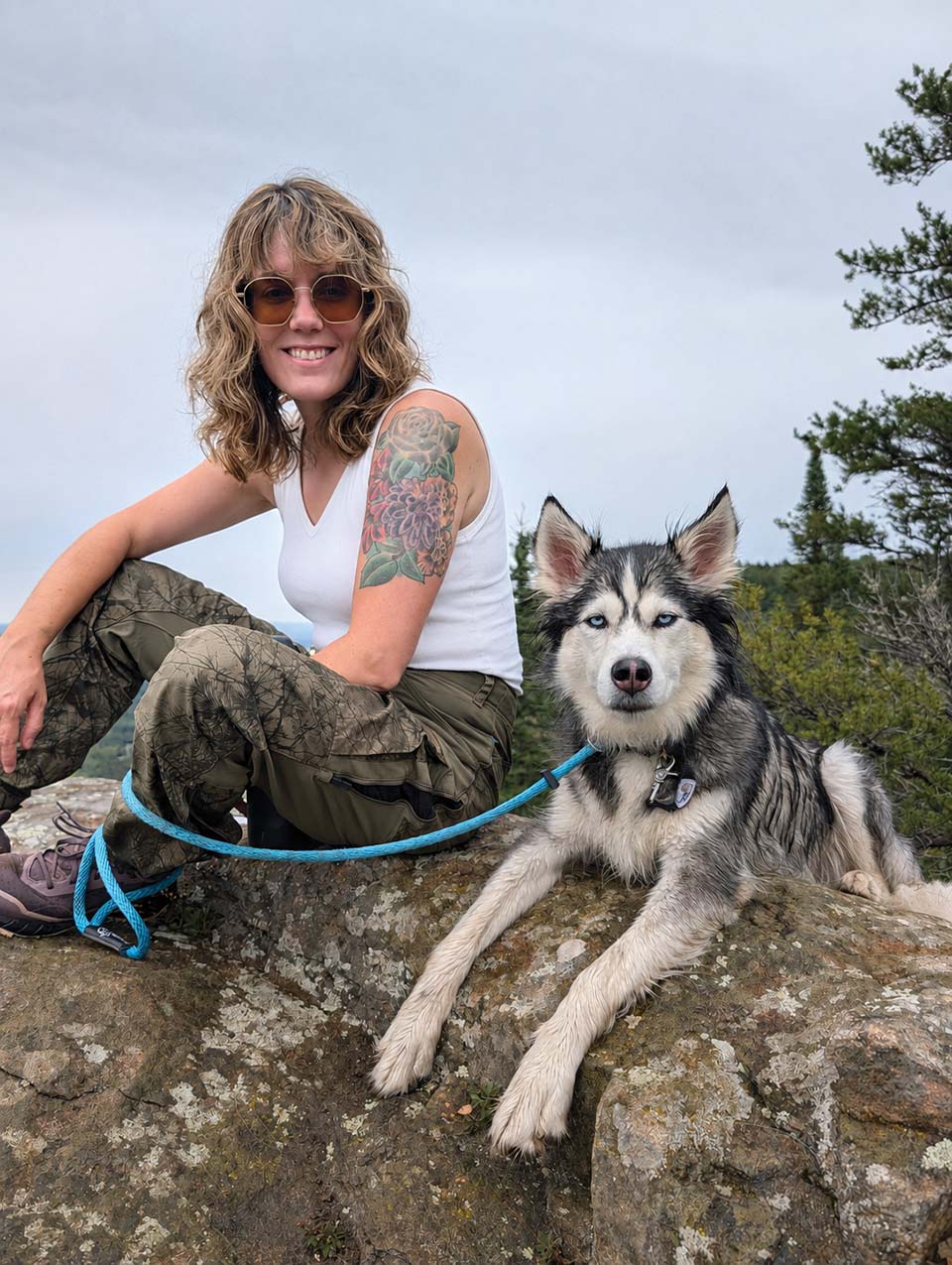
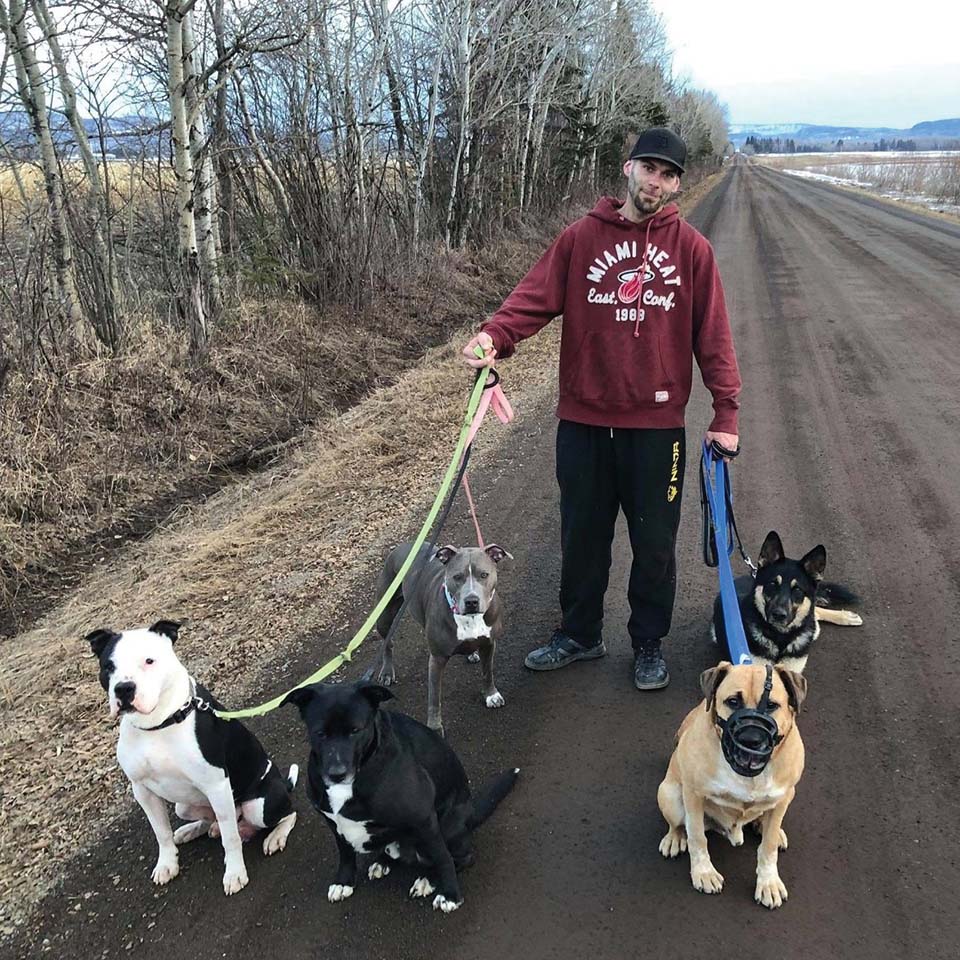
Two of Thunder Bay’s very skilled dog trainers are here to shed some light on dog training and their methods. Brandi Shorthouse of Northwest Solutions Inc - K9 Division, and Jesse James Jongsman of Jericho Harrison Canine Sanctuary have loads of experience and can bring you and your dog towards the best relationship possible.
Our History
Dogs and humans have had a companionable relationship for some 23,000 years since wolves began hanging around human encampments in search of food scraps. Over time, the less fearful and less aggressive dogs bred in proximity to people and eventually became the domesticated dogs we have today. It has been a wonderful relationship many have enjoyed.
But what do we do when it isn’t?
Let’s Learn How to Dog
Brandi Shorthouse says dog owners must teach their canine companion “how to dog” in a human world. “Dogs who demonstrate unwanted behaviours are merely confused,” Brandi says. learning dog psychology and how to read their body language, we gain the ability to communicate with a dog in a manner they naturally understand. From there, we can begin rewiring their brain patterns through relationship-based leadership.”
In Brandi’s experience, unwanted behaviours occur for several reasons: handler/owner miscommunication, insufficient early socialization, and an underlying insecurity. “To the dog, this is not bad behaviour. This is their attempt to interpret what their role is with the current information they have in their life experience. When guidance is inconsistent or unclear, the dog’s internal ‘job description’ or ‘pack role’ becomes muddled, and they begin filling in the blanks themselves.”
Simply put, dogs need leadership and if they don’t get it from their owners, they will become the leaders, whether they are leadership material or not.
Jesse James Jongsman agrees. “It’s been my experience that most issues with dog reactivity come from a lack of purpose and leadership. We used to breed dogs for specific reasons, but they have become an impulse item. This has left them struggling for fulfillment of their natural instincts.”
A dog bred for herding sheep whose home is now an apartment in a city is going to need an outlet for those innate behaviours or problems will happen. Jesse believes it’s an important lesson for humans. “We need purpose and challenges to overcome in order to stay mentally healthy, just as much as our dogs do.
The most challenging part of being a dog trainer is helping owners understand why dogs do what they do. Dogs are not people, and people are not dogs. Each has to learn how to live with each other.
Brandi recalls one of her most challenging cases, a dog who was human-reactive, insecure and anxious, who lashed out in an aggressive manner in order to create space. “This dog had so much potential to live in our human world but was too scared to do so,” she recalls. “The owners were feeling stuck, confused and emotional. Their willingness to learn their dog’s language, and to make meaningful changes in their daily lives, ultimately enriched their dog’s life and broadened their world as a family.”
“It was truly special,” Brandi says. “It takes much time and commitment to rehabilitate in the home through consistent structure and follow-through on the treatment plan. By speaking the dog’s language, reading his body language, as well as putting in appropriate human boundaries and having regular safe socialization, changes were made. They were able to repattern the dog’s brain so he could be secure in himself, self-regulate, learn impulse control, and ultimately, ‘how to dog’.”
Jesse, who is known for his amazing ability to work with bully breeds and dogs on their last chance, maintains that it’s always great to see dogs and their owners strengthen their bonds and relationships but believes the most rewarding part of dog training is people training. “If I have learned anything about dogs it’s that it’s always about the humans. The happiest cases are the ones where the owners go through some sort of personal growth and overcome fears and push past trauma.”
Jesse also believes there are a lot of misunderstandings when it comes to working with dogs. “I believe that trainers often want their methods to be the best for all dogs. But they may have forgotten that different breeds have different purposes and drives so that’s an impossibility.” In other words, the methods for training a poodle won’t necessarily work with a pit bull.
Brandi maintains that to create change, owners must focus on direction rather than correction.
“Miscommunication occurs when we as humans communicate in our language, not in the dog’s language. If you focus on direction ahead of an anticipated correction, you catch the issue within the dog’s threshold.”
For example, if a dog runs to the door barking and lunging when a delivery driver arrives with a package, this is not the first instance the dog notices them. If the owner watches their dog, they will see their ears perk up, their eyes go wide, their tail point straight up and/or their mouth tighten well before that person knocks on the door.
Brandi suggests that owners find the moment the dog notices but does not react (aka their threshold), and give them a clear direction, such as “bed,” “place,” “focus”, etc. Instead of providing correction at the door, the owner provides direction ahead of time.
Over time, the dog will have new neural pathways that communicate: “I am expected (aka ‘my job is’) to go to my place when the tires of a vehicle hit our driveway.”
Jesse stresses that clear communication is the key. “Let your no be no and your yes be yes,” he says. “Dogs understand very well that properly communicated discipline is not just safety and survival but also the ability to thrive in demanding situations and environments.”
There is so much to say about dog and owner training that we can not possibly cover it in one short magazine article. But if there is something dog owners need to take away, it is this: the bond between a dog and a human is wonderfully unique and will always be treasured but to keep a positive relationship, humans must learn ‘how to dog’ and communicate effectively. In short, dog owners often don’t correct their dog’s bad behaviour because they simply don’t know how.
A reputable dog trainer, however, can guide both the dog and the owner in remedying any negative behaviour and move them onto a much more enjoyable relationship.
And isn’t that what all dog owners and their dogs want?