
Long before I understood the complexities of the world, I understood the comfort of a melody. Often, our home was filled with the soft, rhythmic strumming of my mom’s acoustic guitar, and her comforting voice as she sang.
If she wasn’t playing her guitar, she was still singing along with the records. That music and the crackle of vinyl spinning on the record player in our living room created many warm memories for us all. My mother was a country music singer, a woman who carried songs in her soul the way other people carry breath in their lungs. And of all the voices that filled our home, Dolly Parton was one of the most important.
When my mother sang, her voice would harmonize with Dolly’s soaring soprano, creating a blanket of sound that made our house feel safe and warm.
Every song she wrote and performed was a masterclass in storytelling, but it also made me feel seen. When I first heard the song “Coat of Many Colors,” I realized Dolly and I had something in common: people being judgy and mean because you didn’t have what they had. I had what I needed as a kid but we lived in a house that had no running water.
Dad always wanted to live in the country, and planned to dig a well for our home. We were alright living without water for a good portion of our time in that country house, as we could always get water, still had baths and an outhouse. As far as people making fun of me for something I had no control over, in the words of my mom, “They’re your friends until they aren’t. Let them go.” Turned out, that was an easier task than I thought it would be.
“Coat of Many Colors” was a true story about a coat Dolly’s mother made for her. That song taught me that wealth has absolutely nothing to do with money.
I would sing along with my mother, trying to harmonize with her. Through these special moments, I learned that a mother’s love and pride could stitch together rags and make them feel like royal robes.
“Love Is Like a Butterfly” was a favourite for a few reasons. It was a song full of joy. It was bright and happy and to this day makes me smile when I hear it. My mother often asked me to sing it. She loved that I could go up and down the scale and hit the notes of that song, and I loved to make her proud.
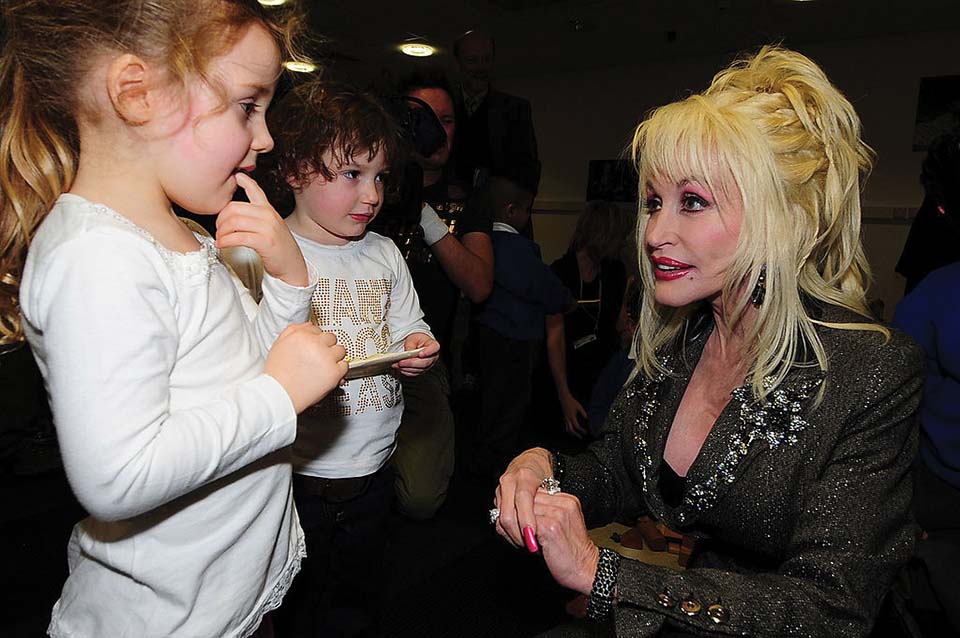
As I grew older, I learned the magic of Dolly wasn’t just in her voice or her glittering rhinestones; it was in the woman herself. She was the definition of class. In a world that now thrives on controversy and division, Dolly evolved with the times and never changed from being herself and sharing her message of unconditional love through caring, donating and speaking for those who did not have a platform. She did not care where you came from, what you looked like, or whom you loved; she just loved you.
And then there was her humour. Dolly had a wit as sharp as a diamond and twice as bright. She famously joked about how much it cost to look so cheap, all while outsmarting everyone
in the room. Her humour was never cruel; it was an invitation to take ourselves a little less seriously and to find the joy in just being alive.
For me, and for millions of others, it was like losing a beloved family member. It felt as though a light had been switched off in a room that we had always trusted would remain bright. We wept for the woman who had donated books to children, who had quietly funded medical research, and who had spent a lifetime making sure nobody felt invisible. The grief was so heavy because her love had been so vast.
May we all be half as kind, half as giving, and half as authentic as Dolly was.
She left behind a blueprint for how to live a life fueled by grace and unapologetic joy.
Dolly may be gone, but the love she poured into the world remains, caught like a butterfly in the timeless melodies she left behind.