
Far away on the other side of the world, where the seasons are reversed, lies a land of astonishing beauty and incredible fertility. Home to dense forests and icy glaciers, deep fjords and sandy beaches, sub-arctic at its southern end, sub-tropical at its northern tip, New Zealand is home to a remarkable diversity of wines of all styles and colours.
Far away from anywhere, New Zealand is an assemblage of islands deep in the south Pacific Ocean, with the two largest, known simply as North Island and South Island, comprising almost the entire country. Today we visit South Island, and work our way northward.
Larger in size than North Island, but lower in population, South Island’s wine country begins mid-way down its length, where vineyards are closer to the South Pole than any others in the world. This southernmost region is known as the Otago, where harsh, cold winters pose the same challenges faced by our domestic winemakers here in Canada. Some wines from the Central Otago occasionally reach our shores. The neo-Edwardian city of Christchurch is the economic and political centre of the island; this more-British-than-England city has been devastated by major earthquakes more than once, rebuilding with stone and courage each time.
The wine region around Christchurch, continuing with the historical British affiliation, is called the Canterbury Plain. This is a less well-known region, but serves as the introduction to the most productive region, Marlborough.
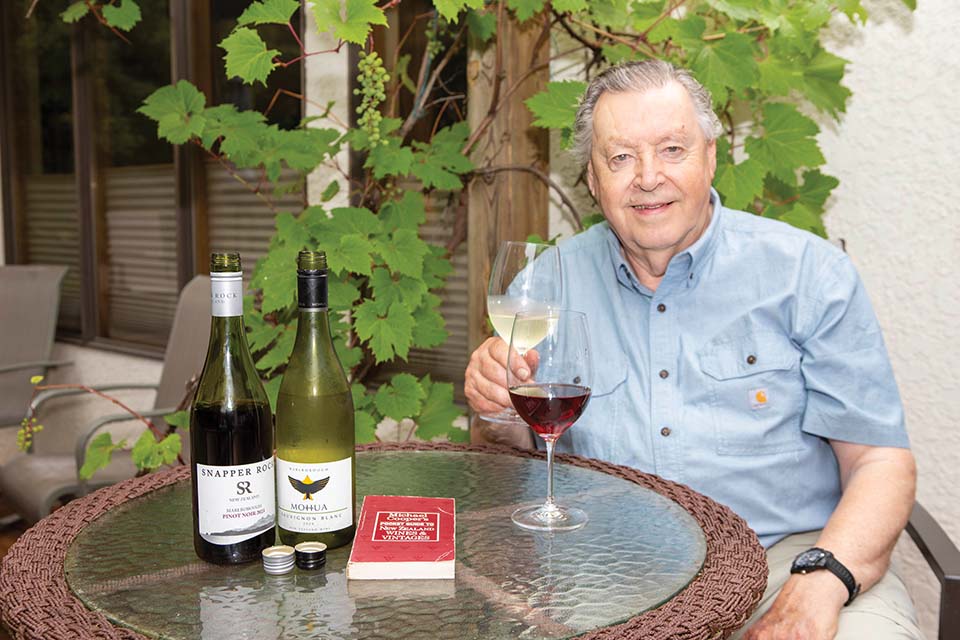
At the north end of South Island, the county’s largest wine region, Marlborough, produces more than half of all New Zealand wine. While wines of all types and styles may be found here, their clever marketers have chosen two specific wines – one red, one white – as the focus of their enterprise: Sauvignon Blanc for white and Pinot Noir for red, and most successful they have been, to the point where Marlborough dominates the country’s export market to the world. Sauvignon Blanc made here is bold and dramatic, upending your expectations of what this grape can do. While retaining the distinctive grassy nose, the crisp steeliness of its old-world cousins is replaced by exotic, explosive, overwhelming fruit. This bold and brash Sauvignon Blanc has come to define the New Zealand style, and ever-increasing production struggles to keep up with soaring international demand. Oyster Bay and Kim Crawford are the largest commercial brands, Cloudy Bay is the prestige name, and there are many other artisanal vintners to watch for.
Pinot Noir is known as the ‘heartbreak grape’ for its difficulty to vinify successfully – everybody tries, but few succeed in mastering its fickleness. New Zealand winemakers are now the most successful internationally, once again by diverging widely from the old-world origins. A good Marlborough Pinot Noir keeps the faintly gamey character of the original, but surrounds it with full, rich, ripe fruit, accessible when young but retaining the capacity to age almost indefinitely. Whenever the occasion calls for a good burgundy, a dynamic Marlborough Pinot Noir will substitute admirably.
All New Zealand wines should carry the name of their region – Otago, Canterbury, Nelson and Marlborough are the four South Island regions. They are bottled (with rare exceptions) under screw-cap closures, so you don’t need to lay them down for storage (although most of us do) and you never get one with a faulty cork. They are generally modestly priced, providing excellent value for your limited wine budget. Embrace them for their modern, fruit-driven style, their sheer, unbridled exuberance and their uninhibited, voluptuous pleasure. They will add a new dimension to your wine experience, and may well surprise you by becoming your house favourites.
© Paul Inksetter 2026